RANGE / TOOLS

Tools.

Flaring and swedging tools, tube cutters and benders, ratchet keys, manifold gauge sets, vacuum and recovery pumps, pinch-off pliers, charging hoses, pressure washers, torches and service bags.
FEATURED BRAND / VALUE

VALUE HVAC&R tools.

Vacuum systems and refrigeration tools for installation, service and maintenance.
Explore VALUE refrigeration tools and vacuum systems for air-conditioning installation, servicing and refrigeration maintenance. Contact Refrigeration Centre, Chennai, for product information, availability and trade pricing.
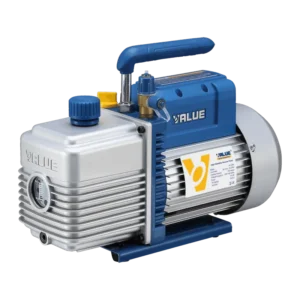
  • VALUE VE2100N N Series vacuum pump

    Vacuum pumps

    Vacuum pumps for evacuating air-conditioning and refrigeration systems, from mains-powered models to cordless battery pumps.
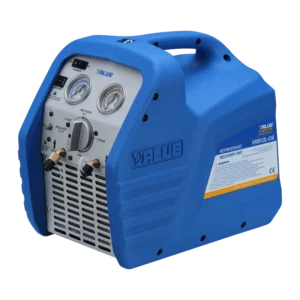
  • VALUE VRR12L L Series refrigerant recovery unit

    Refrigerant recovery units

    Recovery units for taking refrigerant out of air-conditioning and refrigeration systems during service.
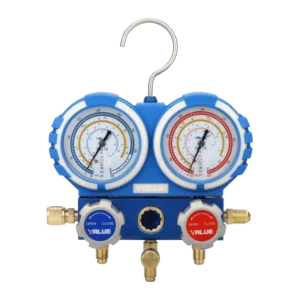
  • VALUE VMG-2-R32 analogue manifold gauge set

    Manifold gauges and HVAC instruments

    Analogue and digital manifold gauges, plus vacuum gauges, clamp multimeters, anemometers and infrared thermometers.
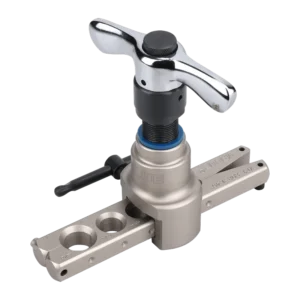
  • VALUE VFT-809-I flaring tool

    Refrigeration pipe tools

    Flaring tools, tube cutters, tube benders and tube expanders for installing copper refrigerant pipe.
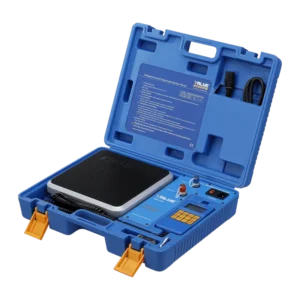
  • VALUE VES-50B refrigerant scale in carry case

    Refrigerant scales and leak detectors

    Electronic refrigerant scales for charging by weight, and a handheld refrigerant leak detector.

Photographs and specifications are VALUE's own, from worldvalue.cn. VALUE is a trademark of its owner. Enquire for availability and trade pricing; models are confirmed on the call.

What we stock.

14 items in this line, confirmed on the call for stock and trade price.

Flaring tool

Eccentric flaring cone for copper tube ends.

Swedging tool

Expands tube ends for socket joints.

Tube cutter

Wheel cutter for copper tube.

Tube bender

Lever, spring, ratchet and PVC benders for soft copper.

Ratchet key

Ratchet service wrench for valve stems.

Manifold gauge set

Two and four valve manifolds with hoses.

Vacuum & recovery pump

Evacuation and recovery pump for refrigerant circuits.

Pinch off plier

Seals tube for leak isolation and repair.

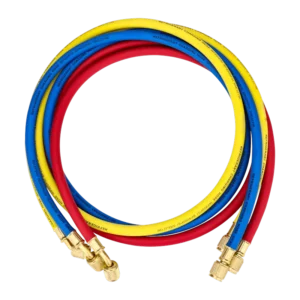
Charging hose

Hoses with valve depressors for charging and recovery.

Pressure washer

For coil and condenser cleaning.

Washing cover

Catches wash water off wall and ceiling mounted indoor units.

Torch

Brazing torch for copper joints.

Tools bag

Service technician tool bag.

General tools

Spanners, drivers, pliers and consumables for service work.

Tools for AC and refrigeration work.

Do you stock both hand and powered tools?

Yes. Hand tools include flaring and swaging tools, tube cutters, lever, spring, ratchet and PVC benders, ratchet keys and pinch-off pliers. Powered tools include vacuum and recovery pumps, and pressure washers for coil and condenser cleaning. Tell us whether you need manual, hydraulic, cordless or electric, and Refrigeration Centre will confirm what is on the shelf.

Can I get a full service kit?

Yes. Ask for a kit list and Refrigeration Centre will put together what you need from stock — flaring and swaging tools, cutters, benders, a manifold gauge set, a vacuum pump, a torch and a service bag.

What tools are needed to install AC copper piping?

A typical kit is a tube cutter and deburrer, a flaring tool suited to R32/R410A flares, a swaging tool, a tube bender, torque spanners for flare nuts, a brazing torch with a nitrogen supply, a manifold gauge set and a vacuum pump. Refrigeration Centre stocks flaring and swaging tools, tube cutters, benders, manifold gauge sets, vacuum pumps, torches and service bags, and can make up a kit from stock.

Brazing and installing copper pipe.

How do you braze copper pipe for AC and refrigeration?

Cut the tube square, deburr it and clean the joint. Fit it into a fitting or a swaged socket, and purge the inside with a low flow of dry nitrogen. Heat the joint evenly with the torch until the copper reaches brazing temperature (a dull cherry red), then feed the filler rod and let capillary action draw it around the joint. Keep the nitrogen flowing until the joint has cooled, then pressure-test the system with nitrogen. The brazing guide covers each step in detail.

Why is nitrogen used when brazing copper pipe?

Flowing dry nitrogen through the pipe while brazing pushes out the air, so the hot inner surface does not oxidise into black copper-oxide scale. That scale later flakes off, clogging filter driers, capillaries and expansion valves and contaminating the compressor oil. Dry nitrogen is also the gas for pressure testing; never use oxygen, which can ignite oil residue, or compressed air, which carries moisture. See how to purge with nitrogen.

Which brazing rod is used for copper-to-copper and copper-to-brass joints?

Copper-to-copper joints are normally brazed with copper-phosphorus rods (BCuP, with 0–15% silver), which flux themselves on copper and need no added flux. Copper-to-brass joints need flux, with a high-silver phosphorus rod or a silver-brazing alloy. Copper-to-steel joints need a silver-brazing alloy (BAg) with flux, because phosphorus-bearing rods form brittle joints on steel. Refrigeration Centre stocks copper, brass and silver rods, flux and butane — see consumables and tapes. See the brazing rod table.

Flare joint or brazed joint — which should I use?

A flare joint is mechanical: the tube end is flared and clamped with a brass flare nut, so it can be undone, and split ACs use flares at the units’ service valves. A brazed joint is permanent, stronger and less prone to leaks, so it is used to join pipe runs, fittings and VRF branches. Flares must be made with a flaring tool suited to the refrigerant, the matching nut and the correct tightening torque. See flare or brazed joints.

How do you pressure test and evacuate copper refrigerant piping?

After brazing, pressurise the piping with dry nitrogen to the test pressure in the outdoor unit’s manual and leave it to confirm the pressure holds. Then release the nitrogen and evacuate the piping with a vacuum pump to the level the manual specifies — commonly 500 microns (about 67 Pa) or lower. Check that the vacuum holds before opening the service valves. See pressure testing and evacuation.